In Good Hands
Designing and developing a website for a massage therapist offering therapeutic bodywork in Reykjavík.
Designing and developing a website for a massage therapist offering therapeutic bodywork in Reykjavík.
This project started with a simple goal: create a calm, trustworthy website for a solo massage therapist in Reykjavík. The therapist has over 20 years of experience in massage therapy, and the website needed to reflect that, not through complicated service menus, but through clarity, warmth, and an easy way to book. I handled the project end-to-end, including structure, branding direction, UX writing, UI design, and development. The site is designed to support both kinds of clients: people who come in with pain or long-term tension, and people who simply want to relax and feel lighter in their body.

Research
Reviewed massage websites to identify trust signals and friction points.

Planning
Built a simple structure focused on clarity, trust, and quick booking.

Design
Created the visual direction and wrote the website copy.

Development
Built the website and integrated cal.com scheduling for an MVP launch.

Delivery
Prepared the site for real use, with a plan for future iterations.
Massage websites often fall into two categories: soft “wellness template” sites or very clinical and impersonal. For this project, the goal was neither. The service is personal and experience-led, so the website needed to feel calm, human, and trustworthy, without sounding like marketing or medical treatment.
Early on, I treated this project as a translation task: how do you bring a real in-person experience online without losing the feeling of care and competence?
I focused the planning around three questions:
One of the biggest decisions was how to present services. The practitioner has 20+ years of experience in therapeutic massage and bodywork, and his sessions are guided by communication, assessment, and adaptation, not a fixed “menu item”.
So instead of asking clients to choose one massage type upfront, the website keeps booking simple: people choose a session length (60 / 90 / 120 minutes), and the session is adapted from there.
Sessions may include therapeutic massage, manual techniques, mobility work, and when relevant, simple exercises or recommendations to support progress after the appointment.
At the same time, we still reference familiar massage goals and types (relaxation, sports recovery, pain relief) — partly to make the service easy to understand, and partly for SEO, so the website can be found by people searching in more traditional terms.
The visual direction needed to feel calming and grounded - not trendy, not sterile.
I explored multiple color directions early on, but the design became much more aligned once I shifted toward warm browns and natural neutrals. This palette felt closer to the service itself: steady, warm, and safe.
I kept the copy calm and practical, especially for first-time clients who might not be sure what to book. The goal was to explain what to expect and make the next step feel easy.
Examples:
The tone stays clear and grounded, without overpromising results.
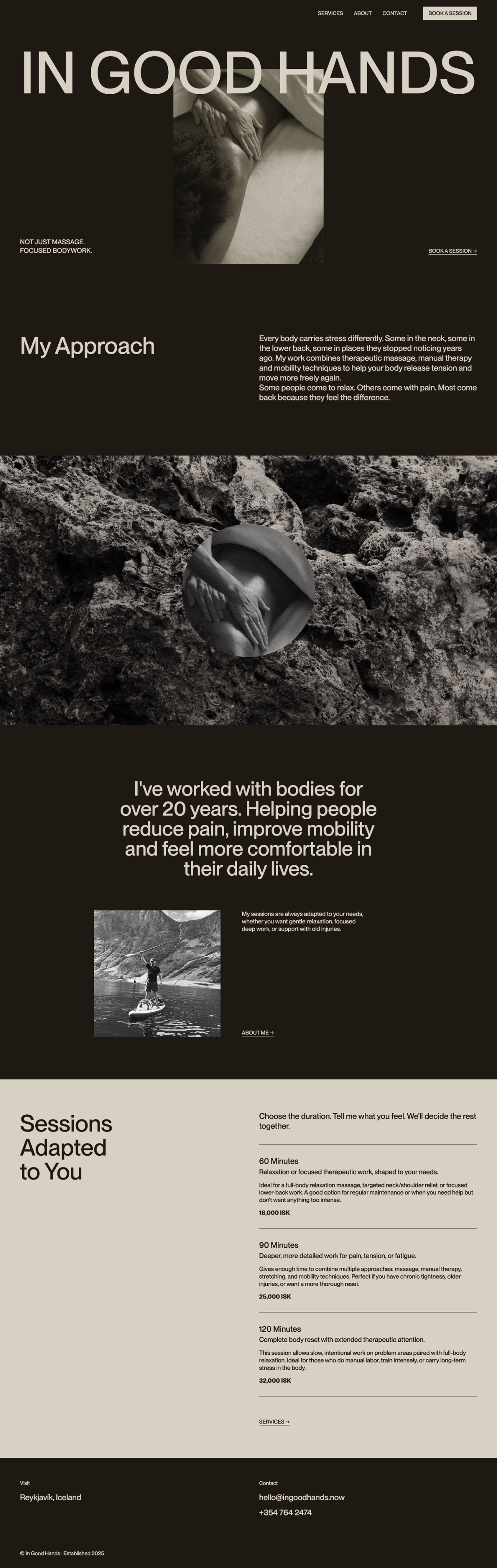
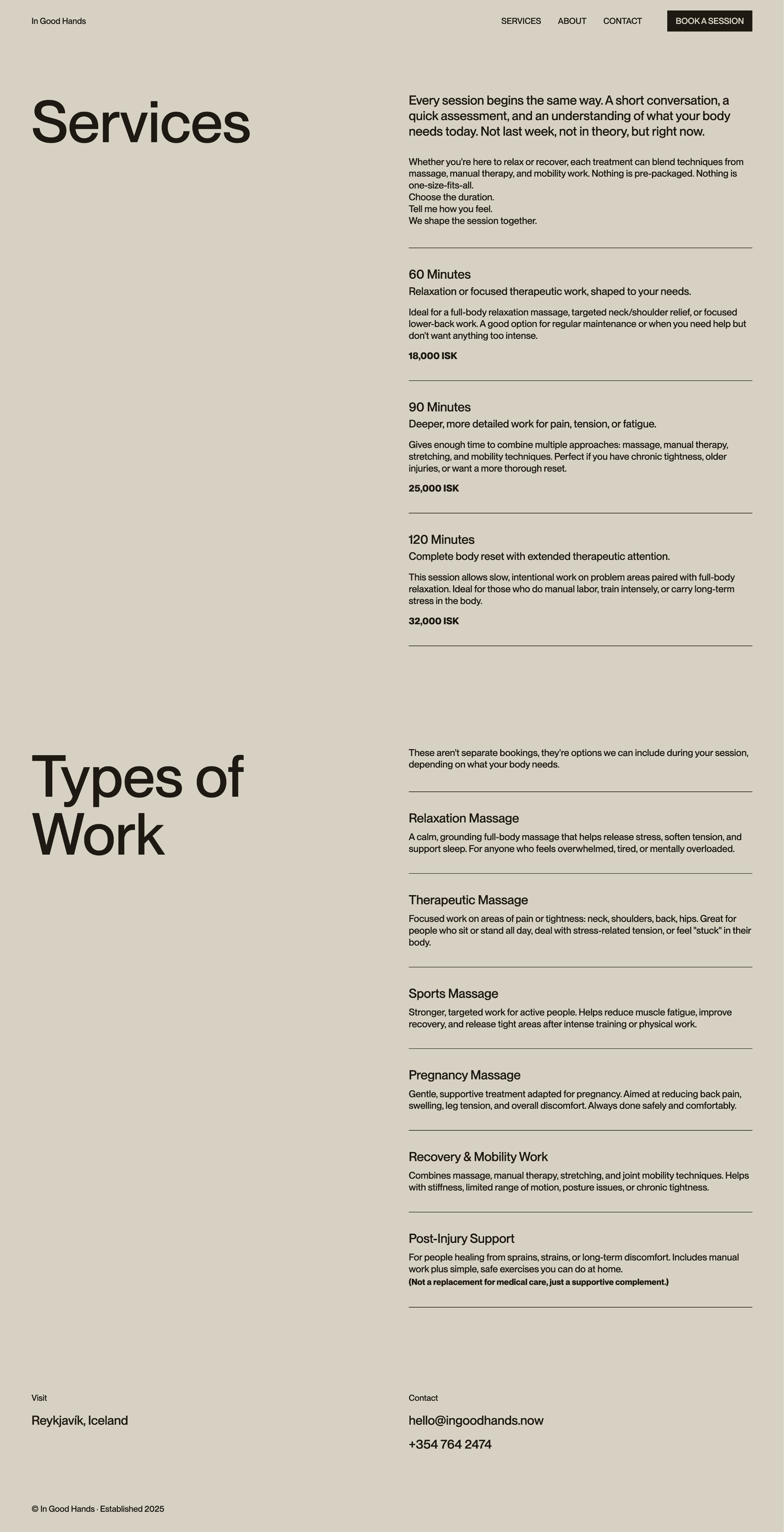
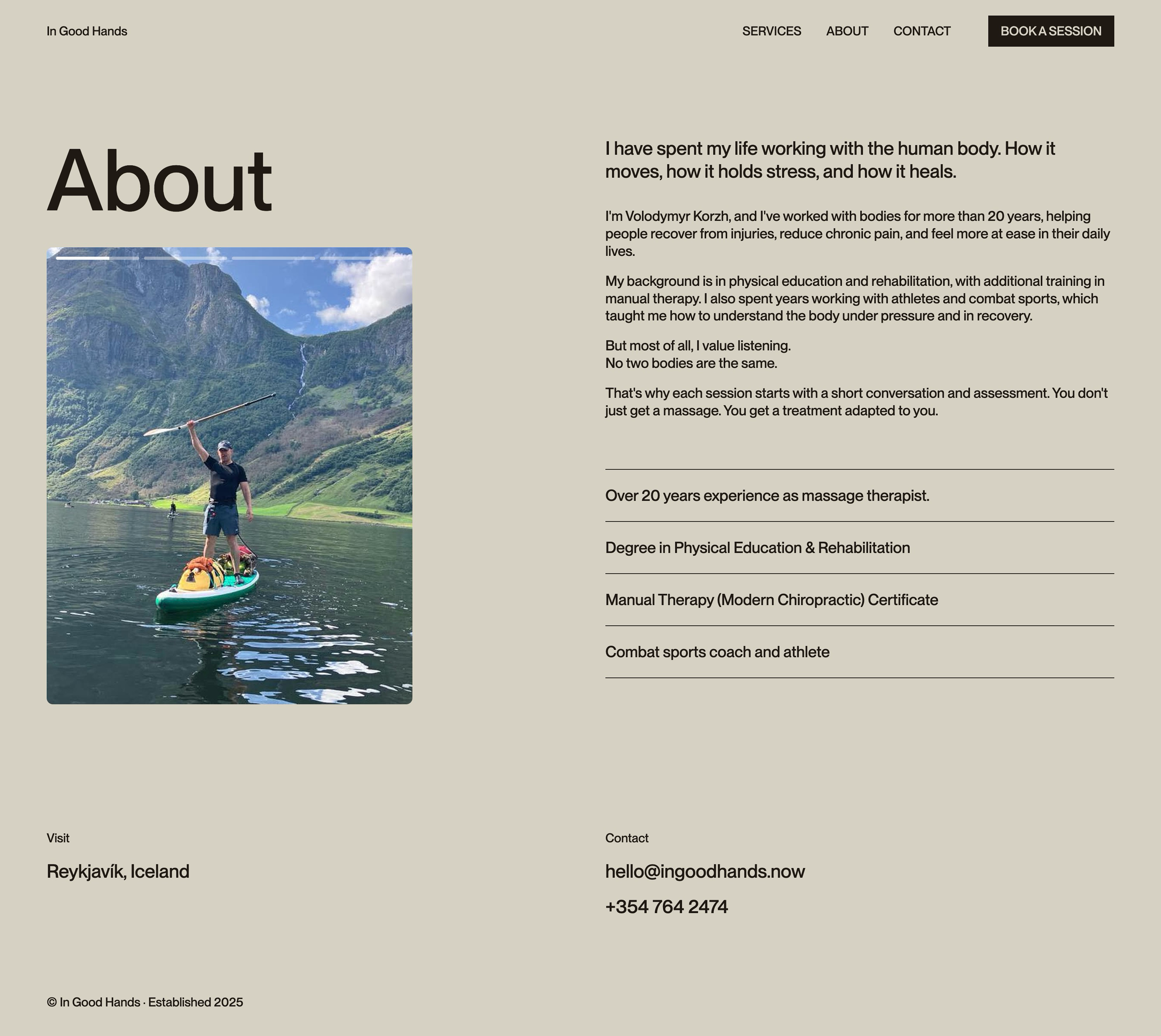
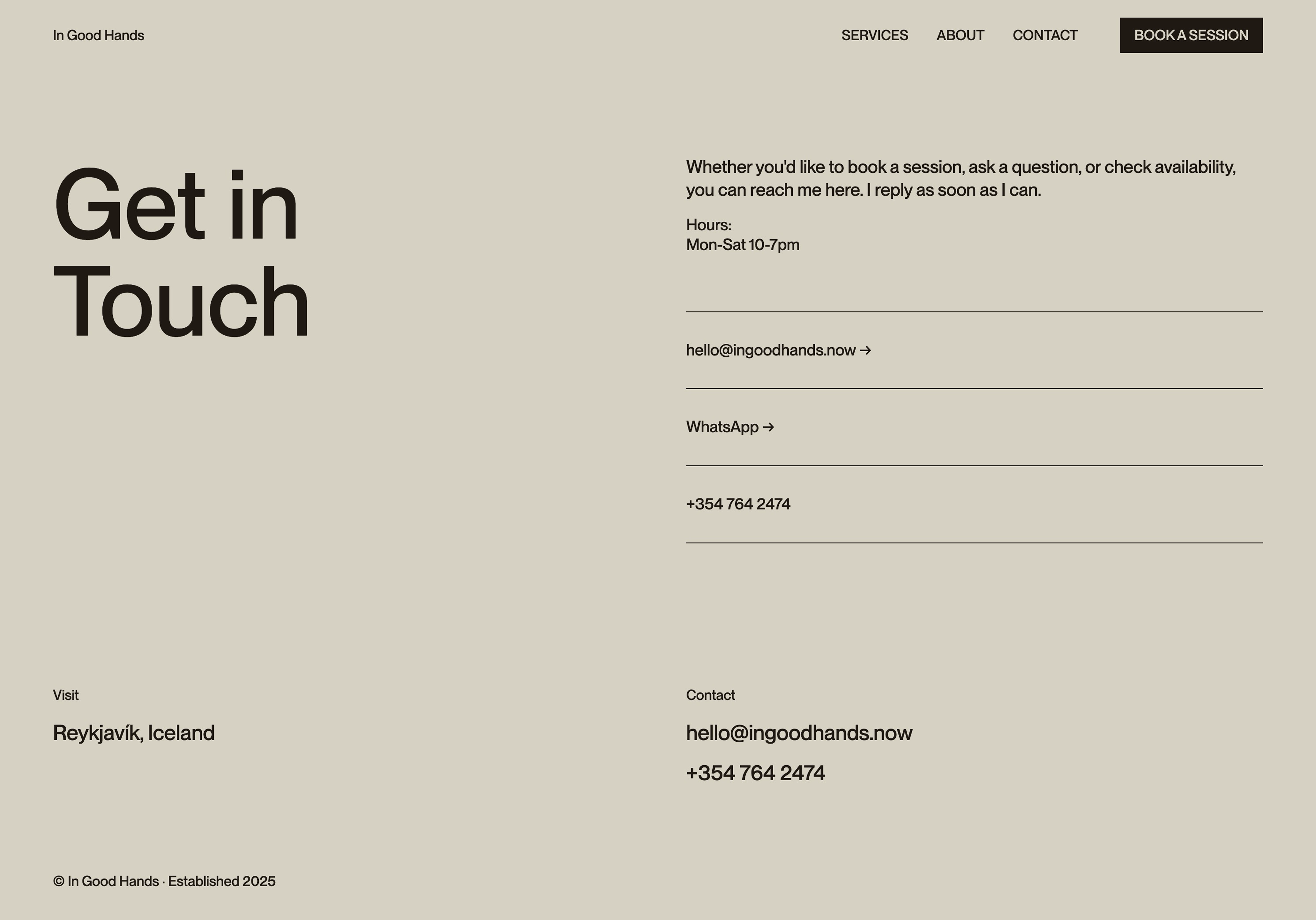
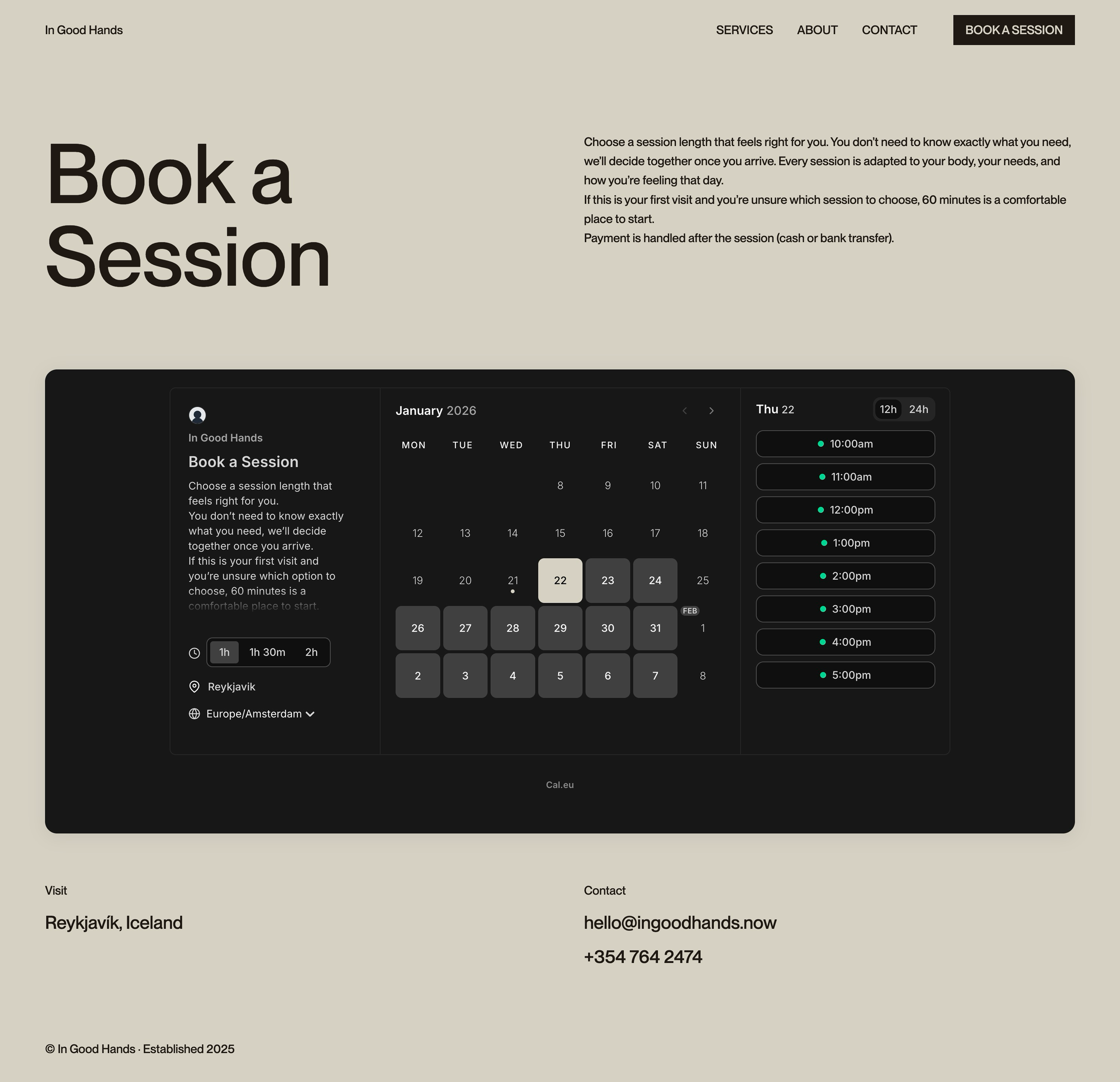
I developed the website alongside the design to make sure the final experience matched the intended tone: fast, calm, and easy to navigate.
Since the goal was to launch something functional quickly, I integrated Cal.com for scheduling. This supported a lightweight MVP:
Online payment was intentionally kept out of the first version. Payment can be handled after the session, which helps reduce commitment friction for new clients. Stripe can be added later if the business needs deposits or online prepayment.
I loved working on this project because it wasn’t about selling a service, it was about making someone’s work understandable online.
The practitioner behind In Good Hands has built decades of trust through experience and communication, and the website needed to reflect that without overexplaining. The result is a small site that feels grounded in real experience and makes the next step feel simple - especially for people who don’t know exactly what they need yet.
As the practice grows, the site can grow too, but the core should stay the same: clarity, care, and trust.